

The Medical Oncology Department at Hospital Puerta de Hierro takes part in two Phase I clinical studies against advanced ovarian cancer
Scientific Culture and Innovation Unit
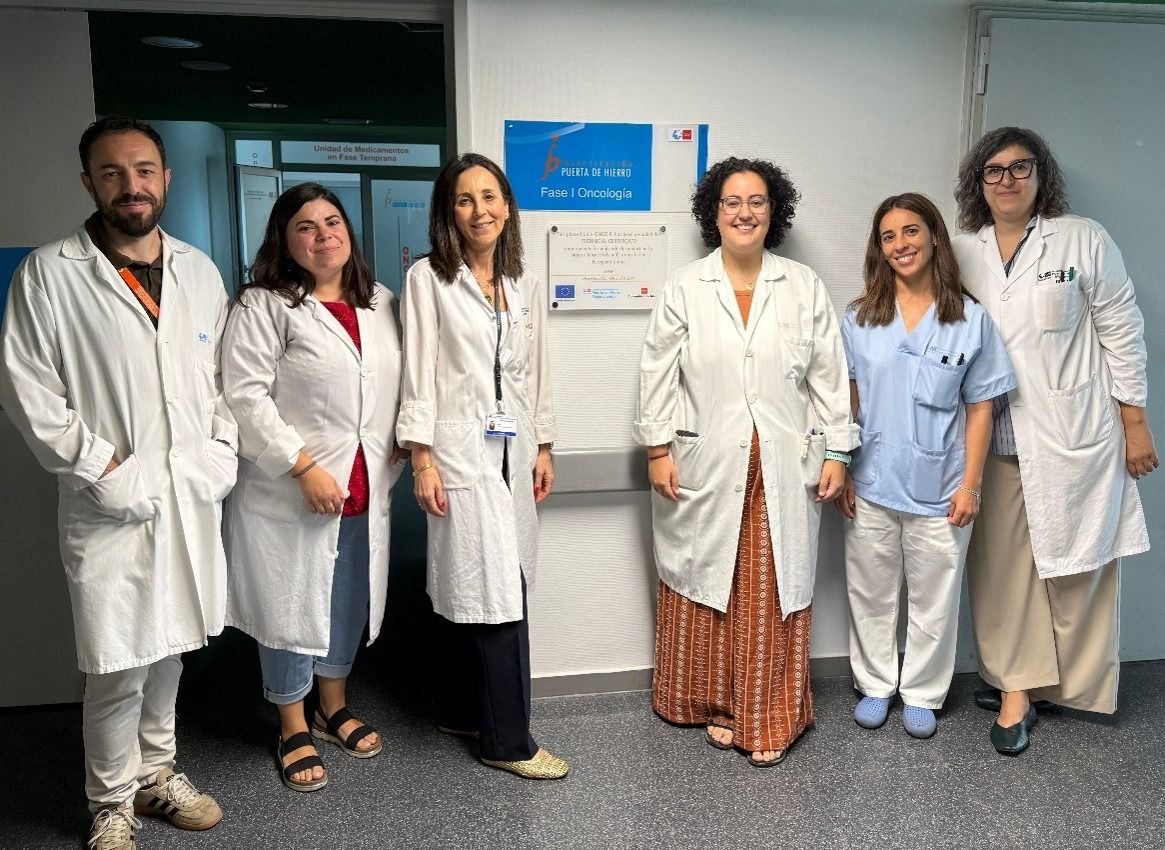
Hospital Universitario Puerta de Hierro Majadahonda is taking part in two clinical studies seeking to develop two new antibody-drug conjugates for the treatment of advanced ovarian cancer. Both Phase I trials, GSK 300163 and MK 5909-003, are being carried out within the Gynaecological Tumours Unit of the Medical Oncology Department by Dr Ana Oaknin and Dr Constanza Maximiano. This initiative represents an important step forward in the research of new oncology treatments and reinforces the centre's position as a benchmark in medical innovation.
One of the key features of both studies is the use of a therapy that acts selectively against tumour cells. These are antibody-drug conjugates (ADCs antibody-drug conjugates), a new generation of cancer-targeted therapies that combine an antibody's ability to recognise cancer cells with the effect of an anti-tumour drug such as those used in chemotherapy. Thanks to this mechanism, they specifically recognise tumour cells and deliver to them the drug capable of destroying them. In this way, they act as a “smart vehicle” that directs the drug straight to the tumour cells, sparing the rest of the healthy cells. This is one of the main advantages over other conventional treatments, since the aim is to increase efficacy and reduce toxicity.
Specifically, the MK 5909-003 study (NCT06843447) is analysing the combination of the antibody-drug conjugate Raludotatug Deruxtecan (R-Dxd) with other anti-tumour treatments. It is a multicentre study carried out at highly selected sites in the United States and Europe, with Dr Ana Oaknin as global Principal Investigator.
The research, which has the support of Dr Mariano Provencio, Head of the hospital's Oncology Department, represents an important step forward in the search for new treatment options for ovarian cancer, the second most common gynaecological cancer in Spain. This tumour accounts for approximately 5% of cancers diagnosed in Spanish women and, in 70-80% of cases, is detected when the disease is already at an advanced stage.
The addition of Phase I studies will make it possible to evaluate innovative therapies at early stages of development, facilitating patients' access to new treatment options and contributing to the advancement of scientific knowledge in this field.
Leaders in the search for new personalised cancer treatments
With the addition of these studies, Hospital Universitario Puerta de Hierro Majadahonda strengthens its commitment to clinical research and positions itself at the forefront of gynaecological tumour studies within the Community of Madrid. This initiative consolidates the centre's role and reinforces its position as a benchmark in the search for new, more effective and personalised treatments for patients with gynaecological cancer.
This advance also reinforces our position as a Comprehensive Cancer Centre (CCC Comprehensive Cancer Center), highlighting a comprehensive, personalised and humanised oncology care model, aimed at providing the best response to patients' needs and based on clinical excellence, cutting-edge research and continuous innovation.