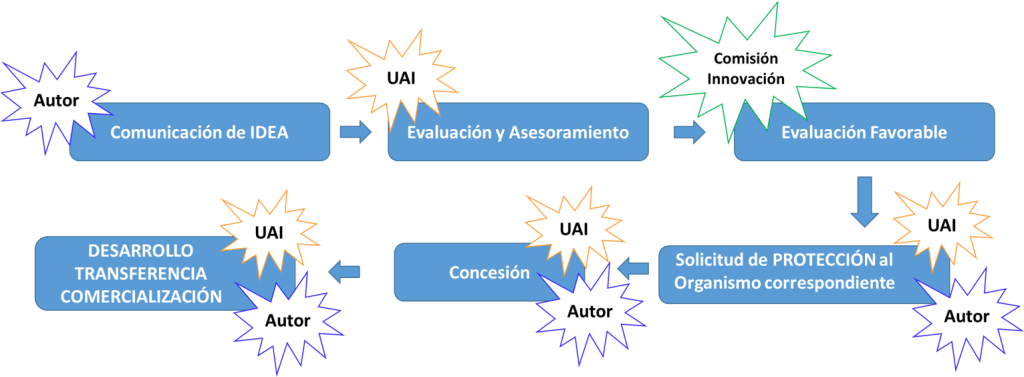

The IDIPHISA Innovation Support Unit (UAI) was established in September 2013 as part of the Medical and Healthcare Technology Innovation Platform (ITEMAS), funded by the ISCIII, Subdirectorate General for Research Evaluation and Promotion (reference PT13/0006/0030). Since its foundation, the UAI has been responsible for managing innovation at IDIPHISA, channelling innovative ideas and proposals from the Institute's various research groups and professionals from its member centres. The UAI also participates in assessing and managing ideas so that they can be developed into inventions, products or services that add value to the healthcare system and society, and advises professionals on the protection and translation of health research results throughout the innovation and technology-transfer process, fostering a culture of innovation through appropriate training and promoting entrepreneurship and talent.
During the 2018–2020 period, within the framework of project PT17/0005/0003, the IDIPHISA UAI completed its maturation process by obtaining certification under the UNE 166002 R&D&I Management System standard, a milestone achieved in July 2019. This certification, successfully renewed in July 2020, provides a quality seal for the services delivered by our UAI, ensuring that the Unit covers all essential aspects associated with innovation processes. As a distinguishing feature compared with the UAIs of other institutes, it should be noted that our institution was the first public institution in Spain to obtain UNE 166002 certification covering the entire R&D&I Management System, thus preventing the UAI from operating in isolation and integrating a culture of innovation into the Institute's other common processes and services. This encompasses the generation of the idea or research question, the search for and securing of funding, development, use of the Institute's cross-cutting services, monitoring the achievement of results or technical solutions to a health problem, their transfer or application, and their impact on improving patient care and the National Health System itself.
The UAI is a structure that channels innovative ideas and proposals from the Institute's various research groups and hospital professionals. It participates in assessing and managing ideas so that they can become inventions, products or services that add value to the healthcare system and society.
It advises professionals on protecting and translating health research results throughout the innovation or technology-transfer process, fostering a culture of innovation through appropriate training and promoting entrepreneurship and talent.
COORDINATOR
- Mariano Provencio Pulla
MEMBERS
- Luz Pérez Gómez de Cadiñanos
- Jesús Rey Jiménez
Objectives
- Identify innovation opportunities and priorities: novel ideas, initiatives, processes or experiences carried out by our professionals.
- Foster a culture of innovation: learning should be facilitated from the conception of an idea through to the protection and exploitation of results, whether in the form of scientific output or an invention.
- Act as a channel for the development of innovation projects, healthcare technologies and industrial prototypes.
- Protect the results of research activity and promote the dissemination and transfer of results.
SERVICES
- Advice on and protection of research results.
- Support in drafting and planning innovation projects, prototyping and partner searches.
- Management of relations with industrial and intellectual property agencies.
- Technical management of innovation processes: advice on innovation strategy and monitoring of the process.
- Manage the patent portfolio.
- Advice on technology-transfer procedures and licensing.
- Promotion of a culture of innovation: dissemination of funding calls and innovation events.
Innovation Committee
- Receives and promotes new innovative ideas and projects in line with IDIPHISA's strategic priorities.
- Advises researchers, selects project ideas and proposals, and monitors and follows their development, reporting innovation activity to the Scientific Directorate.
- Channels proposals to the Innovation Support Unit for the protection and exploitation of results and technology transfer.
CONTACT
- Jesús Rey Jiménez: jrey@idiphim.org
- Luz Pérez Gómez de Cadiñanos: lperez@idiphim.org
Technology Sheets





OncoApp ©IDIPHISA, 2016
Software application
OncoApp is a free app whose purpose is to provide cancer patients and their families with personalised information and advice about their disease.

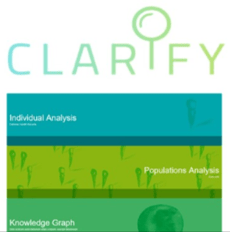
CLARIFY Digital Decision Support Platform ©IDIPHISA, 2022
Software application
The CLARIFY platform is an artificial-intelligence tool that enables the real-time integration and analysis of different heterogeneous data sources. It supports the characterisation of patient cohorts, survival analysis, management of prognostic factors, treatment response and follow-up, and the development of predictive models that identify characteristics associated with a poor prognosis and stratify patients by risk, enabling clinicians to make evidence-based decisions.

Scientific Coordination Tool©IDIPHISA, 2022
Software application
Investig@ is a tool developed by IDIPHISA for recording and validating the scientific output of researchers from all its member centres. After the initial login, researchers access the application, where they are shown pending information-reporting tasks related to the current year's Scientific Report. From a menu, they can navigate through the different items available for completion: Researchers, Projects, Publications, Theses, books, Awards, Clinical Guidelines, Patents and Relevant Milestones.


SiGIPHISA©IDIPHISA, 2025
Software application
The IDIPHISA Inventory Management System (SIGIPHISA) allows for the registration and maintenance of all the Institute's equipment. Its main features are:
- Bulk upload of equipment using Excel templates.
- Check available equipment.
- Equipment upgrade by the laboratory managers
- Generation of a unique QR code for each registered equipment, allowing anyone to access the public features of said equipment without needing to be registered on any platform (for example, ISCIII auditors, ...).
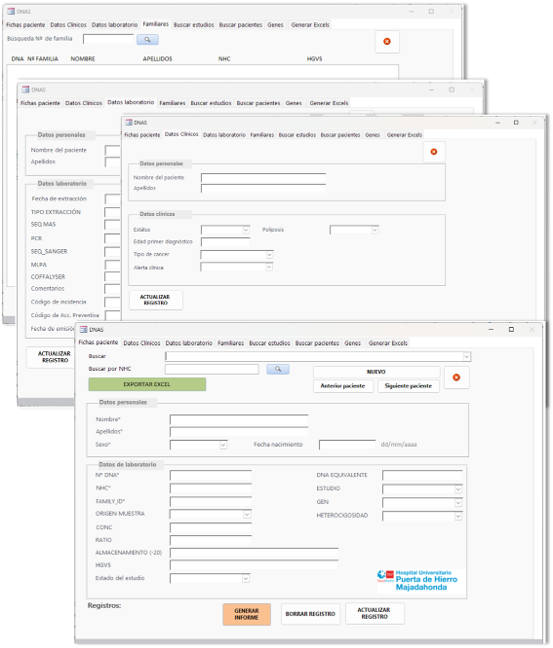
Patient Sample Registration Application©IDIPHISA, 2025
Software application
Historically, the recording of data for the Liquid Biopsy Laboratory (LBL) - Familial Cancer was done manually on paper only, which caused problems such as a lack of backups, difficulty in searching for information and the risk of data loss. The database “Patient Sample Registration Application” digitalises the recording of patient clinical data and the characteristics of the pre-analytical and analytical process of their sample, guaranteeing traceability and precision. It offers:
- Automation,
- Greater precision,
- Real-time access,
- Reduce errors,
- Optimise time and regulatory compliance of laboratory processes.
GinePlanner©IDIPHISA, 2025
Software application
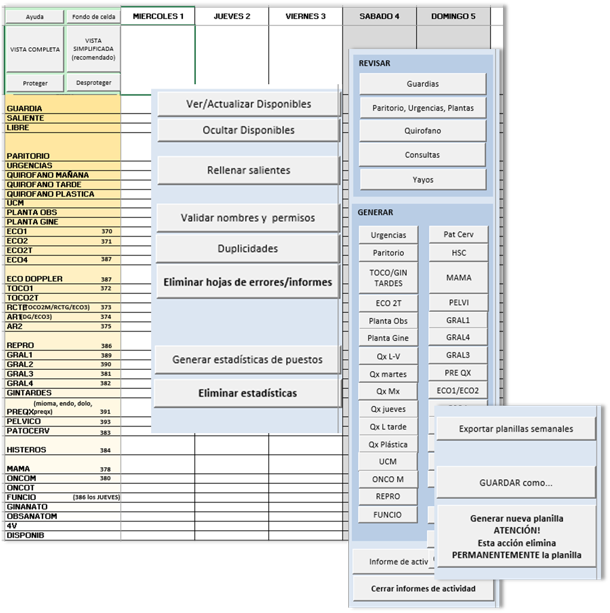
GinePlanner is a digital tool that enables automated monthly roster planning for hospital clinical services. This planner is currently implemented and fully operational in the Obstetrics and Gynaecology Department. Its key features include:
- Automatic and equitable assignment of the most suitable personnel to each job role.
- Review of monthly rotas, detecting errors such as doctors assigned to two simultaneous or incompatible posts, or those who have not been assigned.
- Generation of reports with the detected errors and statistics on the monthly activity of each doctor.
- Generation of weekly rotas, facilitating the manual review of assignments, etc. It is an intuitive assignment page, which adapts to potential changes in the department's doctor rota, etc.
HUPHM-AnonDatos©IDIPHISA, 2025
Software application
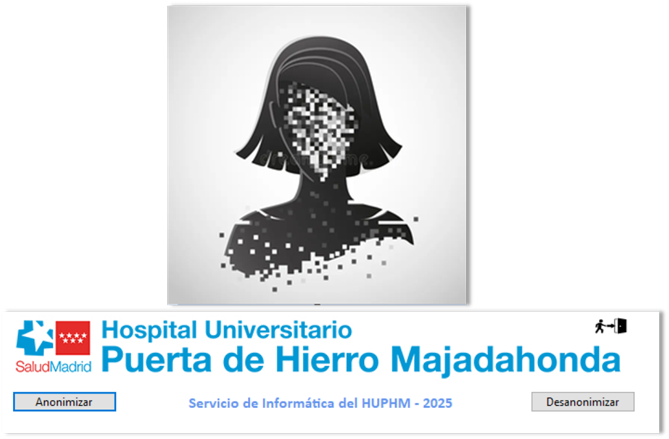
HUPHM-AnonDatos is an automated tool developed to guarantee the anonymisation and controlled deanonymisation of structured clinical data. Among its key functions are:
- Management and preparation of sensitive data for analysis, research and advanced exploitation (including AI projects and Big Data environments).
- Native compatibility with Excel (XLSX) and delimited CSV files.
- It works in any Windows environment without external dependencies or an internet connection.
- Controlled and reversible de-anonymisation exclusively under key custody.
- It complies with GDPR regulations, the LOPDGDD, the ENS, and the guidelines of the Ethics Committees.

LEOMASC©IDIPHISA, 2026
Software application
LEOMASC: Advanced Platform for Clinical Safety and Comprehensive Inpatient Management is an innovative web application based on advanced digital patient modelling. Through personalised 3D avatars (gender, age, body mass index, skin colour, amputation recognition), an integrated, dynamic and 360° visualisation of the patient's clinical status in real time is obtained. It stands out for:
- An approach focused on clinical safety and comprehensive care management
- Interoperable system with the electronic health record
- Accessible from mobile devices
- Real-time access to critical information at the point of care Multimodal capture of clinical data
RPI Entry No: 16/2026/7024
Clinical practice guidelines, recommendations and consensus documents
This section contains the Clinical Practice Guidelines, Consensus Documents and Recommendations in which IDIPHISA professionals have participated, as tools for translating scientific research results into healthcare practice within the Institute:

Diagnostic / prognostic calculators
Diagnosis of Familial Adenomatous Polyposis (APC, MUTYH genes) ©IDIPHISA, 2024
Objective: Genetic testing of patients with suspected attenuated adenomatous polyposis based solely on the number of adenomas has a very low diagnostic yield because of the high number of patients with negative results. To improve this, this calculator has been developed using more comprehensive information and returns the probability that the patient has a hereditary syndrome.
IDIPHISA Research Group(s): Liquid Biopsy Laboratory, Biostatistics Unit
Department: Gastroenterology and Hepatology
© IDIPHISA, 2024; All rights reserved.
Significant Fibrosis Risk Calculator ©IDIPHISA, 2024
Objective: The most advanced stages of fibrosis in patients with chronic liver disease can lead to end-stage liver disease, hepatocellular carcinoma and even liver transplantation or death. Hospital Universitario Puerta de Hierro Majadahonda has developed a formula that calculates the risk of significant fibrosis (F2–4) using non-invasive serological tests. This formula makes it possible to select patients to improve the detection of significant fibrosis while reducing the number of unnecessary referrals for FibroScan®.
IDIPHISA Research Group(s): Hepatology, Biostatistics Unit
Department: Gastroenterology and Hepatology
© IDIPHISA, 2024; All rights reserved.
Nomogram to predict the risk of histological transformation (HT) from follicular lymphoma to diffuse large B-cell lymphoma ©IDIPHISA, 2024
Objective: Follicular lymphoma (FL) is the second most common type of B-cell non-Hodgkin lymphoma, with an annual incidence of 3–5 per 100,000 inhabitants in the United States and Europe. Around 10–30% of patients undergo transformation to a high-grade lymphoma, most commonly diffuse large B-cell lymphoma (DLBCL). However, predicting transformation at diagnosis remains difficult. To improve prediction, a nomogram has been developed that enhances the IPI's predictive ability by incorporating the mutational status of three genes in addition to high-risk IPI.
IDIPHISA Research Group(s): Lymphoma Research, Biostatistics Unit
Department: Medical Oncology
© IDIPHISA, 2024; All rights reserved.
Two-step algorithm (2-S) for the genetic classification of diffuse large B-cell lymphoma: Two-step classifier ©IDIPHISA, 2025
Objective: This tool makes it possible to assign a genetic subtype to diffuse large B-cell lymphomas (DLBCL) at diagnosis. The Two-step classifier simplifies the genetic classification available for DLBCL by allowing genetic subtype assignment using a simple panel of only 26 genes together with routine Pathology laboratory data, such as FISH for BCL2, MYC and BCL6.
IDIPHISA Research Group(s): Lymphoma Research
Department: Medical Oncology
© IDIPHISA, 2025; All rights reserved.
GEVATS Risk Score: Predictive Surgical Risk Model in Thoracic Surgery ©
Objective: Follicular lymphoma (FL) is the second most common type of B-cell non-Hodgkin lymphoma, with an annual incidence of 3–5 per 100,000 inhabitants in the United States and Europe. Around 10–30% of patients undergo transformation to a high-grade lymphoma, most commonly diffuse large B-cell lymphoma (DLBCL). However, predicting transformation at diagnosis remains difficult. To improve prediction, a nomogram has been developed that enhances the IPI's predictive ability by incorporating the mutational status of three genes in addition to high-risk IPI.
IDIPHISA Research Group(s): Thoracic Surgery, Biostatistics Unit
Department: Thoracic Surgery
© IDIPHISA, 2025; All rights reserved.
Inflam-MACE Score: Inflammation-Based 30-Day MACE Predictor in STEMI Patients ©
Objective: This tool improves risk prediction in patients with ST-segment elevation myocardial infarction (STEMI) using a simple score that includes inflammation-related parameters at admission (CRP and IL-6) and performs better than traditionally used scores. The Inflam-MACE Score is simpler (it includes only 5 variables: 3 clinical and 2 inflammatory) and has better predictive performance (AUC 0.866) than the scores traditionally used.
Department / IDIPHISA Research Group(s): Cardiology, Biostatistics Unit
© IDIPHISA, 2025; All rights reserved.
Calculation of Ideal Lung Compliance in intubated patients under general anaesthesia ©
ObjectiveIt is the first specific predictive tool that allows the calculation of Ideal Pulmonary Compliance (understood as the maximum pulmonary compliance that a patient can present after intubation) by means of non-invasive measurements. This model, by integrating individual physiological characteristics (age and height) together with the actual dynamic compliance recorded by the machine, makes it possible to detect anomalous reductions in compliance at an early stage, optimise ventilatory settings from the beginning of surgery, and guide protective ventilation decisions (individualised PEEP adjustment, reduction of pressures).
IDIPHISA Research Group(s)Anaesthesia, Critical Care and Pain, Biostatistics Unit
HUPHM ServiceDepartment of Anaesthesiology, Surgical ICU and Pain Units
Other Research Group(s)/Service(s)Dept. of Anaesthesiology, Resuscitation and Pain Therapy (H.U. La Paz)
© IDIPHISA, 2026; All rights reserved.

Get in touch with us, we will be happy to offer you:
- Advice on and protection of research results
- Support in drafting and planning innovation projects, prototyping and partner searches
- Management of relations with industrial and intellectual property agencies.
- Technical management of innovation processes: advice on innovation strategy and monitoring of the process
- Manage the patent portfolio
- Advice on technology-transfer procedures and licensing
- Promotion of a culture of innovation: dissemination of funding calls and innovation events
Remember, order matters!

Tell us about your IDEA: Complete the questionnaire
From the Innovation Support Unit (UAI), we will treat the information in strict confidence