
Dr Mariano Provencio highlights the impact of the NADIM studies at the UAM Faculty of Medicine collaborative conference
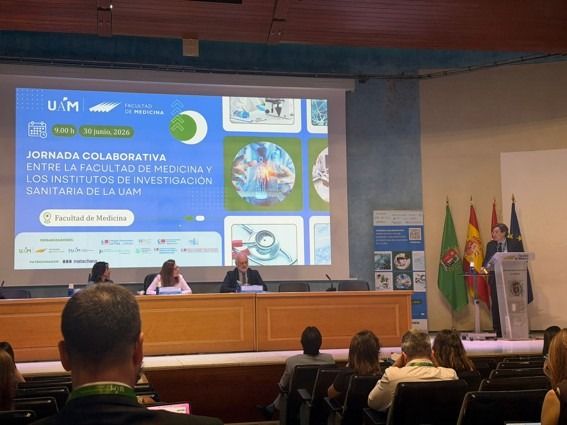
On 30 June, the Faculty of Medicine of the Universidad Autónoma de Madrid (UAM) held a collaborative conference with the Health Research Institutes of the hospitals affiliated with the UAM. The event aimed to strengthen collaboration between the university and the hospital environment, promoting the exchange of knowledge, scientific collaboration and the generation of joint projects among clinicians, researchers and academics, fostering synergies that drive translational research, innovation and excellence in training.
During the conference, Dr Mariano Provencio, Scientific Director of the Instituto de Investigación Sanitaria Puerta de Hierro-Segovia de Arana (IDIPHISA), highlighted the impact of the NADIM studies on the evolution of treatment for non-small-cell lung cancer (NSCLC). Their results have represented a major step forward in the treatment of this disease and have helped change the global treatment paradigm
Pioneros en el cambio de paradigma
Lung cancer is the leading cause of cancer death worldwide. Approximately 80-85% of diagnosed lung cancer cases correspond to NSCLC, and 20% of patients are diagnosed at stage III or locally advanced disease. In these patients, the tumour has spread locally and, although it can sometimes be operated on, treatment is complex, the risk of relapse after surgery is high, and the prognosis is unfavourable.
The studies NADIM, sponsored by the Spanish Lung Cancer Group (GECP) and led by Dr Mariano Provencio, have marked a turning point in the treatment of NSCLC. The NADIM trial, funded by the pharmaceutical company Bristol Myers Squibb and published in the journal The Lancet Oncology in 2020, was the first to demonstrate the benefit of combining immunotherapy and chemotherapy as a treatment prior to surgery. The results showed that 63.4% of patients achieved a complete pathological response — that is, no viable tumour cells were identified in the tissue removed after surgery — pointing to the efficacy of the pre-surgery treatment.
At three years, the researchers confirmed the benefits observed, with 81.9% of patients still alive and 69.6% having shown no disease progression during this time. These findings were particularly significant, as the authors noted that the proportion of patients alive at three years was almost three times higher than historically observed.
Such was the significance of these findings that the US Food and Drug Administration (FDA) decided to grant accelerated approval to this new treatment regimen, changing the outlook for cure and survival for this group of patients. Although the FDA's approval was based on the international CheckMate-816 study, the foundation for this work was the Spanish NADIM study, the first to explore the benefits of administering chemo-immunotherapy prior to surgery.
Better results compared with conventional treatment
Building on this initial study, the NADIM II trial was launched, which confirmed the benefit of this strategy over conventional chemotherapy treatment, establishing this treatment regimen as a new standard for patients with operable tumours. The study published in The New England Journal of Medicine in 2023 found that 37% of patients achieved a complete pathological response, compared with 7% with conventional treatment. The strategy also improved both survival and the chances of undergoing surgery: 85% of patients were still alive at two years, compared with 63.6% with the traditional approach, and 93% were subsequently able to undergo surgery, compared with 69% of the group treated with chemotherapy.
Long-term outcomes
The five-year results, published in the journal The Lancet Oncology, reinforced the treatment benefits previously observed. 69.3% of patients were still alive five years after starting treatment, and 65% had not experienced disease progression. These results were particularly significant, as the study included patients at high risk of relapse.
Long-term follow-up also confirmed the prognostic value of the pathological response obtained after pre-surgery treatment. In the initial study, approximately 63% of patients undergoing surgery achieved a complete pathological response, and the five-year results showed that these patients maintained a clinical benefit compared with those who did not achieve a complete response.
This study also assessed treatment safety at five years, with no new signs of late toxicity associated with it identified.
In light of these findings, the researchers explained that administering immunotherapy before surgery, while the tumour is still present, may help the immune system recognise a greater number of tumour antigens, i.e. specific characteristics of cancer cells. This could promote a broader response against the tumour and, at the same time, contribute to the development of immune memory. In this way, the immune system may retain the ability to identify and respond again to these antigens, allowing it to recognise and eliminate any residual tumour cells that may remain after treatment, helping to reduce the risk of long-term relapse.
Leadership of Spanish research
In this address at the Collaborative Conference, Dr Provencio highlighted the role of Spanish research in developing new therapeutic approaches for lung cancer. The results of the NADIM studies are helping to transform the global treatment paradigm for these patients.
Further information:
Provencio, M., Nadal, E., Insa, A., García-Campelo, M. R., Casal-Rubio, J., Dómine, M., … & Cruz-Bermúdez, A. (2020). Neoadjuvant chemotherapy and nivolumab in resectable non-small-cell lung cancer (NADIM): an open-label, multicentre, single-arm, phase 2 trial. The Lancet Oncology, 21(11), 1413-1422. DOI: 10.1016/S1470-2045(20)30453-8
Provencio, M., Serna-Blasco, R., Nadal, E., Insa, A., García-Campelo, M. R., Casal Rubio, J., … & Romero, A. (2022). Overall survival and biomarker analysis of neoadjuvant nivolumab plus chemotherapy in operable stage IIIA non–small-cell lung cancer (NADIM phase II trial). Journal of Clinical Oncology, 40(25), 2924-2933. DOI: 10.1200/JCO.21.02660
Provencio, M., Nadal, E., González-Larriba, J. L., Martinez-Marti, A., Bernabé, R., Bosch-Barrera, J., … & Romero, A. (2023). Perioperative nivolumab and chemotherapy in stage III non–small-cell lung cancer. New England Journal of Medicine, 389(6), 504-513. DOI: 10.1056/NEJMoa2215530
Provencio, M., Nadal, E., Insa, A., Campelo, R. G., Casal, J., Dómine, M., … & Cruz-Bermúdez, A. (2024). Perioperative chemotherapy and nivolumab in non-small-cell lung cancer (NADIM): 5-year clinical outcomes from a multicentre, single-arm, phase 2 trial. The Lancet Oncology, 25(11), 1453-1464. DOI: 10.1016/S1470-2045(24)00498-4