

Identification of biomarkers that could predict the response to immunotherapy before surgery in lung cancer.
An international study involving the Puerta de Hierro University Hospital in Majadahonda, published in the journal Nature, evaluates the presence and evolution of tumor and genomic markers during neoadjuvant immunotherapy in patients with non-microscopic (CPNM) resectable lung cancer (that can be removed with surgery). The goal was to identify biomarkers that could predict which patients would benefit most from this treatment regimen.
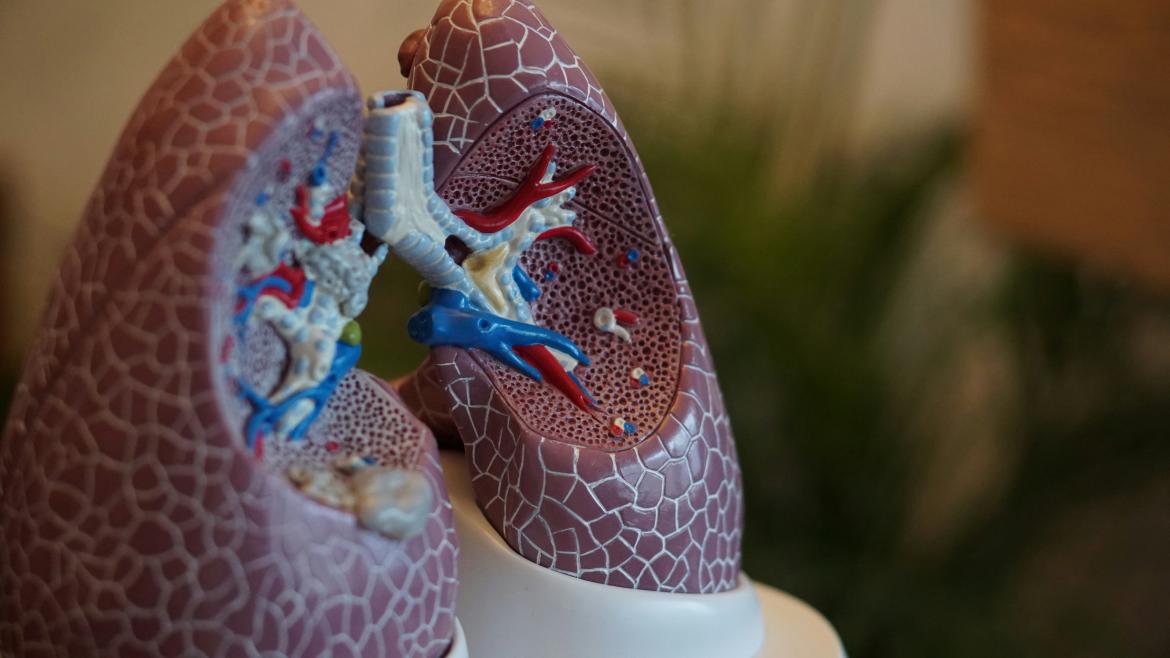
Lung cancer is the leading cause of cancer death worldwide. Approximately 80-85% of diagnosed lung cancer cases correspond to NSCLC, and 20% of patients are diagnosed at stage III or locally advanced disease. In these patients, the tumour has spread locally and, although it can sometimes be operated on, treatment is complex, the risk of relapse after surgery is high, and the prognosis is unfavourable.
In recent years, the incorporation of neoadjuvant immunotherapy into treatment, that is, before surgery, has represented a significant advance in the management of CPND. Trials such as the ones carried out in Spain NADIM and NADIM II, Pioneers in this strategy and led by the Puerta de Hierro Hospital, as well as the international studies CheckMate 816 and CheckMate 77T, have demonstrated clinical benefits with this therapeutic regimen. However, the risk of relapse remains high, so it is necessary to identify markers that allow predicting which patients will obtain greater benefit from the treatment.
Dr. Mariano Provencio, head of the Oncology Service at the Puerta de Hierro University Hospital in Majadahonda and scientific director of the Arana Institute of Health Research Puerta de Hierro-Segovia (IDIPHISA), has participated in one of the most comprehensive genomic studies to date on non-resectable non-small cell lung cancer. The work, published in the journal Nature, is part of the update of the international Phase III clinical trial CheckMate 77T.
Biomarkers to predict response to treatment
The researchers analyzed the results of 190 patients from the international Phase III trial CheckMate 77T. The patients received immunotherapy (nivolumab) combined with chemotherapy before surgery and subsequently continued with nivolumab after the intervention, or they received a placebo as a comparison group.
For the study of biomarkers, circulating tumor DNA (ctDNA), complete pathologic response (pCR), and molecular residual disease (MRD) were analyzed. ctDNA refers to small fragments of circulating tumor DNA in the blood, so it is used for the diagnosis and monitoring of cancer; pCR is defined as the absence of viable tumor cells in the analyzed tissue after surgery and is an indicator of the effectiveness of treatment; and, finally, MRD allows for the detection of residual disease after treatment and constitutes a factor associated with the risk of relapse.
Almost twice as many patients had eliminated these circulating tumor DNA fragments in the blood during immunotherapy compared to the placebo group (66% vs. 38%), and half of the patients with this treatment regimen that managed to eliminate circulating tumor DNA achieved a complete pathological response, whereas only 12% of the patients on placebo achieved this response. On the other hand, patients treated with immunotherapy after surgery showed lower rates of molecular residual disease compared to the placebo group (8% vs. 20%).
The data obtained suggested that the elimination of circulating tumor DNA and the complete pathological response were biomarkers that were associated with better clinical outcomes and were reflected in a longer event-free survival, that is, a longer time without experiencing a relapse or events related to the disease. Furthermore, they reinforce the data from previous publications, such as the NADIM studies, on the efficacy of this therapeutic approach.
Predictive models
Another objective of the work was to study common genomic alterations in this type of tumor, which have historically been associated with poorer prognosis, and to analyze whether their presence could influence the response to treatment. To do this, they used machine learning models., using clinical, molecular and biomarker data.
The results showed that the elimination of circulating tumor DNA before surgery, complete pathologic response, and treatment with nivolumab were among the most useful factors associated with event-free survival. Moreover, the benefits of nivolumab were maintained regardless of the presence of the tumor genomic alterations studied.
Towards personalized medicine
This work reinforces the clinical benefit data obtained in the CheckMate 77T trial, which evaluated the use of nivolumab as a neoadjuvant immunotherapy versus placebo in patients with CPCNP. The results suggest that certain biomarkers, such as circulating tumor DNA and pathological response, could help identify patients with a higher probability of achieving longer-term event-free survival with nivolumab versus placebo, regardless of the presence of certain tumor genomic alterations.
Although this is an exploratory study and additional studies are necessary, these findings contribute to advancing towards more personalized medicine, in which the individual characteristics of each patient and their tumor can help guide therapeutic decisions.
Reference: Cascone, T., Awad, M. M., Spicer, J. D., He, J., Lu, S., Tanaka, F., Cornelissen, R., Petruzelka, L. B., Gao, Y., Pujol, J. L., Ito, H., de Oliveira Muniz Koch, L., Ciuleanu, T. E., Wu, L., Bohnet, S., Watanabe, Y., Taube, J. M., Deutsch, J. S., Erdmann, C. C., Meadows-Shropshire, S., … Provencio, M. (2026). Biomarkers of nivolumab benefit in resectable non-small cell lung cancer. Nature, 10.1038/s41586-026-10925-6.
Dr. Mariano Provencio, head of the Oncology Service at the Puerta de Hierro University Hospital in Majadahonda and scientific director of the Arana Institute of Health Research Puerta de Hierro-Segovia (IDIPHISA), has participated in one of the most extensive genomic studies to date on non-resectable non-small cell lung cancer. The work, published in the journal Nature, evaluates the presence and evolution of tumor and genomic markers during neoadjuvant immunotherapy—that is, prior to surgery—in patients with non-resectable non-small cell lung cancer.
In these patients, the risk of relapse after surgery is high, so it is necessary to identify markers that allow predicting which patients will obtain greater benefit from treatment.
The data obtained suggested that the elimination of circulating tumor DNA and the complete pathological response were biomarkers that were associated with better clinical outcomes with a longer time without relapse or disease-related events.
Although this is an exploratory study and additional studies are necessary, these findings contribute to advancing towards more personalized medicine, in which the individual characteristics of each patient and their tumor can help guide therapeutic decisions.