

A less invasive technique for treating early-stage rectal tumors
Scientific Culture and Innovation Unit
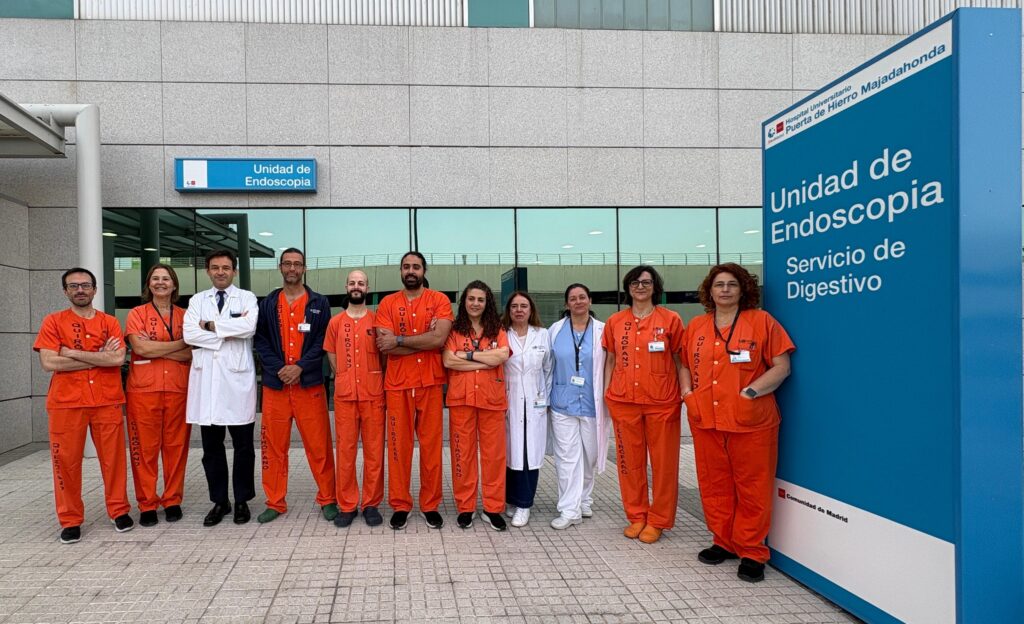
A clinical trial coordinated by the Puerta de Hierro Majadahonda University Hospital and its Research Institute has compared for the first time two techniques for removing rectal tumors at an early stage, evaluating their effectiveness, hospitalization, and costs. The research has contributed to the accreditation of the center as a national benchmark in endoscopic treatment of early gastrointestinal tumors.
Colorectal cancer is one of the most common tumors in the world and one of the leading causes of cancer-related death. In many cases, it develops from lesions that appear in the colon or rectum, the final part of the large intestine. When detected in early stages, it can be treated by removing the lesion, with a favorable prognosis in many patients. To address this, there are minimally invasive techniques that allow the lesion to be removed in early stages without resorting to conventional surgery. This makes it easier for specialists to analyze the tissue and verify that the tumor has been completely removed, in addition to promoting a faster recovery. However, until now it was unclear which technique offered better results.
In this context, a team of researchers coordinated by the Puerta de Hierro University Hospital in Majadahonda and the Arana Institute of Health Research Puerta de Hierro-Segovia (IDIPHISA) has compared, for the first time, two techniques for removing these tumors in a multicenter, controlled and randomized trial that evaluated their efficacy, hospitalization time and associated costs.
The work, published in the journal Gastroenterology, The study was led by Dr. Diego de Frutos Rosa and Dr. Alberto Herreros de Tejada Echanojáuregui, specialists from the Gastroenterology Service of the Puerta de Hierro Hospital and the Therapeutic Endoscopy and Oncology Group of IDIPHISA. In addition, the research contributed to accrediting the Medical-Surgical Unit for Advanced Endoscopic Resection as a National Reference Center, in recognition of the high level of specialization of its professionals in the endoscopic treatment of complex gastrointestinal tumors in early stages.
Two techniques to remove the tumor
The study, DSETAMIS-2018, compared two procedures. First, the endoscopic submucosal dissection (DSE), a technique that allows the lesion to be removed from the inside of the intestine by inserting an endoscope or flexible tube through the rectum equipped with a camera and a special scalpel at its end. This non-invasive technique allows the specialist to guide themselves to the lesion and remove the tumor, without the need to perform any surgery. On the other hand, Minimally invasive transanal surgery (TAMIS) It is a technique that introduces surgical instruments through the anus to remove the tumor. Although both techniques are used as an alternative to more aggressive surgery, it was unclear which one offered better results.
To compare them, the researchers designed a clinical trial with 73 patients from three Spanish hospitals (the Puerta de Hierro Majadahonda University Hospital, the Sant Joan Despí Hospital and the Gregorio Marañón University General Hospital) and were randomly assigned to one of the two treatments, 34 of which received TAMIS and 39 DSE.
At 12 months follow-up, the authors analyzed whether the lesion reappeared in the treated area and observed that there were no differences between the two techniques, nor in the survival of the patients. In turn, they point out that the selection criteria for patients to randomly administer the treatment were very strict, especially due to the limitations of the surgical technique or TAMIS. For this reason, 90 patients with early lesions were excluded from the trial and were treated directly with the endoscopic technique, with results equivalent to those presented in the study.
Therefore, these results indicated that both techniques offered comparable efficacy and reinforced the option of DSE as an alternative for the treatment of these tumors.
Less days in hospital and less costs
Both procedures can present complications such as bleeding, perforations, or infections, which can prolong hospitalization and increase treatment costs. In the study, patients treated with TAMIS (surgery) remained longer in hospital compared to endoscopic treatment. This difference was also reflected in the total cost of the procedure, which was almost twice as high for TAMIS as for DSE.
The study also reflected a greater acceptance by patients of less invasive techniques, such as DSE. During the trial, 18 patients preferred not to participate in the study in order not to undergo the random administration of the treatment, as they preferred the endoscopic technique due to its perceived lower invasiveness, compared to the 4 who preferred the surgical intervention via TAMIS. Moreover, 6 patients, initially randomly assigned to TAMIS, required a change to DSE for technical reasons or personal preferences.
Given these results, the researchers point out that, if both techniques offer comparable effective results, the cost of the procedure should also be taken into account when choosing the most appropriate treatment for each patient.
Promising results
This work proposes a less invasive alternative to surgery for the treatment of early-stage rectal tumors, but equally effective, safe, with shorter hospital stays and associated costs. According to the authors, these less invasive and better accepted techniques by patients are essential, as a more aggressive surgery can lead to significant complications and affect their quality of life.
However, the researchers note that further studies will be necessary to confirm these results, taking into account some limitations of the research, such as the small sample size, the limited follow-up to 12 months and the study design itself, which allows assessing whether DSE offers efficacy comparable to TAMIS but does not demonstrate superiority.
Reference: by Frutos Rosa, D., Alonso Sebastián, I., Barquero Declara, D., Badia Closa, J., Nogales, Ó., Jiménez Gómez, L. M., Santiago García, J., Valentín Gómez, F., Royuela Vicente, A., Sánchez Movilla, A., Albéniz, E., Herreros de Tejada Echanojáuregui, A., Mucosal Resection, & Third-Space Endoscopy Working Group from the Spanish Society of Gastrointestinal Endoscopy (2026). A Randomized Trial of Endoscopic Submucosal Dissection vs Transanal Minimally Invasive Surgery in Early Rectal Neoplasms: DSETAMIS-2018 Study. Gastroenterology, 170(1), 161–173. https://doi.org/10.1053/j.gastro.2025.07.029