

Written in the skin: complications of tattoos
Scientific Culture and Innovation Unit
On October 22nd, Dr. Pablo Tutor, specialist in Internal Medicine at the Systemic and Minor Autoimmune Diseases Unit of the Puerta de Hierro University Hospital in Majadahonda, delivered a research session on the health risks associated with tattoos. Given the growing popularity of this practice, it is necessary to understand its risks and its long-term consequences.

Tattoos have become an increasingly common practice in recent decades, especially among the young population in industrialized countries. It is estimated that Approximately 30% to 40% of the population under 40 in the US and Europe are tattooed.. However, regardless of its meaning or aesthetic reason, its potential long-term health effects have sparked the interest of science. Various studies have identified complications associated with tattoos, such as allergic reactions, skin infections, inflammation, autoimmune diseases, or toxicity (skin reactions) from sun exposure. However, although these malignant complications are rare, given the growing popularity of this practice, it is necessary to understand their risks and long-term consequences.
During a consultation, Dr. Pablo Tutor, specialist in Internal Medicine at the Puerta de Hierro University Hospital in Majadahonda, encountered a case of a patient in whom the tattoo had triggered an inflammatory reaction, affecting the eyes and developing an inflammatory disease known as uveitis. Following this case, he conducted a literature review and presented the possible complications associated with tattoos during the research session held on October 22.
What happens when we get a tattoo?
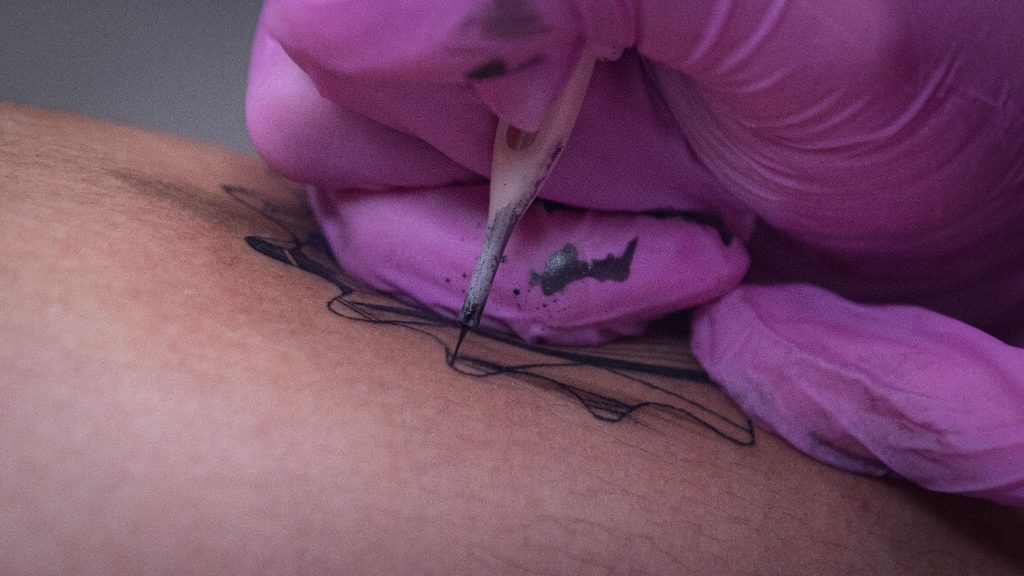
When the needle comes into contact with the skin, the ink is injected into the dermis, the layer that lies beneath the surface of the skin. Once there, the body recognizes the ink particles as foreign material and triggers an immune response to try to eliminate them. However, many of these particles are difficult to degrade, so they remain in the skin cells, making them permanent. However, the ink will not always remain in the tattooed area.
Dr. Pablo Tutor pointed out, based on scientific evidence, that over time, ink particles can reach lymph nodes, structures that act as a filter for the immune system, or via the bloodstream, distant organs. This accumulation of ink can lead to inflammation that persists over time and could result in health complications. In animal research, it is estimated that between 60 and 90% of the pigments that give ink its color travel through the lymphatic system or the bloodstream to other organs such as the liver, spleen, or lungs, where they can remain for years. Specifically, white pigments—used to obtain different shades of ink—were observed in the liver, spleen, and lungs, and red and black ink particles in the liver, which could trigger long-term complications.
Composition of the ink: long-term effects
During his session, Dr. Tutor explained that the problem lies in the ink itself, or rather in its composition. Inks are mixtures of chemical compounds among which are the pigments responsible for imparting color, and other substances such as solvents that allow them to remain liquid to distribute the ink, as well as preservatives intended to prevent the proliferation of microorganisms. To this should be added the quality of the pigments, whose safety depends on the proportion in which these components are present.
Among the most common adverse effects of tattooing are allergic and granulomatous reactions, that is, those that form in response to the tattooing, forming small bumps or clusters of immune cells that encapsulate the injected material. In general, red, black, and green inks, as well as their combinations, are those most associated with allergic reactions, with red being the most common. Therefore, it is recommended that before getting a tattoo, a test be performed on a small area to check for the risk of hypersensitivity to the ink. However, these can also appear some time after the tattooing has been performed. Likewise, other less frequent complications may appear as a result of exposure to ultraviolet radiation from the sun or laser light during the removal of a tattoo. This exposure can break down the pigments in the tattoo, resulting in various chemicals that can have a harmful effect.
Once the tattoo is done, if complications arise, the treatment will depend on the individual case and may include antibiotics, topical cures, antivirals, or other medications; even in exceptional cases, surgery may be required to remove the tattooed area, although as presented in this session, the pigment will remain in our body.
Other complications and problems during medical tests
In some cases, when the ink migrates to the lymph nodes, it can make it difficult to diagnose other diseases due to the accumulation of the pigment. For example, the black pigment can be mistaken for the possibility of metastasis of melanoma—a type of skin cancer—in the lymph nodes. It can also trigger local infections or systemic inflammatory reactions, such as arthritis or uveitis, an inflammation of the eyes, as was the clinical case that Dr. Pablo Tutor began the session with.
This situation could even alter the way our body responds to infections or vaccines. A study With experimental animals, it was shown that the level of response of the animals to the COVID-19 vaccine after being tattooed was lower, while, with other vaccines, such as the flu vaccine, the animals showed a greater response. On the other hand, when tattoos are performed without adequate hygiene and sterilization measures, there is a risk of transmission of infectious diseases such as HIV and hepatitis B and C. In addition, fungal or bacterial skin infections would also have to be added, since these hygienic conditions are not respected during the procedure or during subsequent skin care.
Another possible consequence, explained the specialist in Internal Medicine, was interference with certain medical tests. In some cases, people with tattoos have experienced pain, burning sensation, or discomfort in the tattoo area during an MRI, a technique used in the clinic to obtain detailed images of the interior of the body using magnetic fields. These episodes are rare and could be related to the presence of pigments containing iron oxide, metallic components capable of interacting with the magnetic field.
Finally, the composition of the inks also raises other long-term questions. Although the European regulation will limit the use of certain components, According to the World Health Organization, some of them have been classified as potentially dangerous for health, These substances, classified by the International Agency for Research on Cancer (IARC) as carcinogenic, that is, substances that, when exposed to them, may increase the risk of developing cancer. However, current data indicate an association between these events, but we cannot affirm that getting a tattoo directly causes cancer.
So, what should we keep in mind before getting a tattoo?
Although tattooing is a personal and aesthetic matter, Dr. Tutor highlights that the pigments remain permanently not only in the skin but in the body, and their potential long-term complications are little known. However, given the growing popularity in recent years, he believes that we are likely to see more complications over time and, although they are not frequent, they may be underdiagnosed.
Therefore, in the field of autoimmune diseases, he points out that it should be included, although not as the primary cause of the disease, in the list of possible causes, “especially in cases of extensive tattoos of various colors, and, as some studies seem to indicate, if the tattoo is on the upper extremities, and always asking whether the tattoos are swollen.”.
Over time, the skin changes and tattoos can become deformed or lose their original appearance. However, if we still decide to get a tattoo, Dr. Tutor recommends choosing a center with experience and offering health guarantees regarding the material to be used, as well as following the guidelines provided about the subsequent care.
References:
Dodig, S., Čepelak-Dodig, D., Gretić, D., & Čepelak, I. (2024). Tattooing: immediate and long-term adverse reactions and complications. Archive for occupational hygiene and toxicology, 75(4), 219–227. https://doi.org/10.2478/aiht-2024-75-3921
Capucetti, A., Falivene, J., Pizzichetti, C., Latino, I., Mazzucchelli, L., Schacht, V., Hauri, U., Raimondi, A., Virgilio, T., Pulfer, A., Mosole, S., Grau-Roma, L., Bäumler, W., Palus, M., Renner, L., Ruzek, D., Goldman Levy, G., Foerster, M., Chahine, K., & Gonzalez, S. F. (2025). Tattoo ink induces inflammation in the draining lymph node and alters the immune response to vaccination. Proceedings of the National Academy of Sciences of the United States of America, 122(48), e2510392122. https://doi.org/10.1073/pnas.2510392122
Tamez SA, Özlü.E. Medical complications of tattoos. J Turk Acad Dermatol 2021;15:1–7. DOI: 10.4274/jtad.galenos.2021.02486.